Master the complex rules of trust loss utilization to maximize available deductions, protect client wealth, and stay ahead of impending 2026 tax law changes.
Trust losses can be valuable—but only if they survive the integrity rules. While a trust may carry forward tax losses to offset future income, the ability to actually use those losses depends on satisfying a complex set of tests under Schedule 2F of the ITAA 1936. These rules are frequently misunderstood, poorly documented, and increasingly scrutinised by the ATO.
This practical webinar unpacks when and how trusts can claim carried-forward revenue and capital losses. It examines the impact of family trust elections, the income injection test, the pattern of distributions test, and the ATO’s approach to fixed trusts. Drawing on ATO guidance, determinations, and real-world scenarios, the session helps advisers identify risks early, avoid common traps, and confidently support loss claims.
Designed for accountants, tax advisers, and lawyers advising trusts, this session focuses on practical application rather than theory.

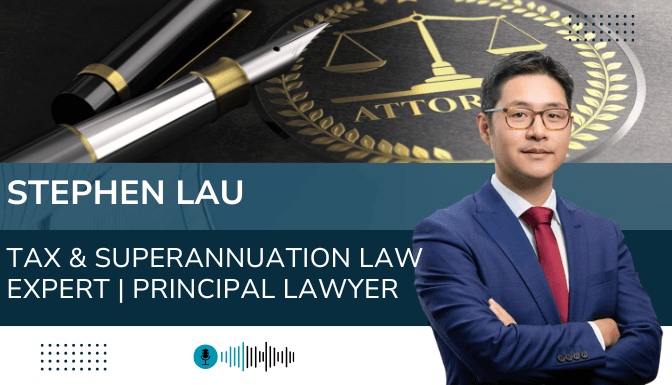
Principal Lawyer, Team Leader - Tax & Superannuation | Coleman Greig Lawyers
Stephen Lau is a Principal Lawyer and Team Leader in Coleman Greig’s Tax and Superannuation team. Stephen specialises in superannuation and tax advisory, tax planning and tax audit/dispute resolution covering all areas of tax, including income tax, indirect tax, fringe benefit tax, and stamp duty. Stephen has a unique and extensive tax background, which covers both in-house tax advisory, professional services at a Big Four chartered accounting firm and the Australian Taxation Office. Leveraging off his tax administration and commercial experience, Stephen takes pride in providing simple, practical tax advice and commercial solutions to a broad range of clients, including high net worth individuals, private groups, ASX listed entities, and large multinationals. He draws upon his unique and broad background and experience, described above, to provide creative, practical, and timely solutions for his clients.
