Mastering the Courtroom: Strategic Approaches to Bench and Jury Trials
This course explores the nuanced differences between bench and jury trials from the perspective of judges and practicing attorneys. Participants will gain insights into strategic decisions related to trial type selection, preparation nuances, and presentation techniques that vary significantly between bench and jury trials. Through discussion led by New York State Supreme Court Justice David Kirschner, the course delves into how attorneys can effectively tailor their approaches depending on the trial format. Real-world examples and statistical insights provide a comprehensive understanding of the dynamics at play in different trial settings.
Topics discussed:
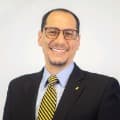
Justice of the New York State Supreme Court
David is a Justice of the New York State Supreme Court in Queens County, Criminal Term. Prior to his election to the Supreme Court in 2021, he served as a Judge of the New York City Criminal Court in both Bronx and Queens Counties. Before his Criminal Court appointment, he was Principal Law Clerk to two New York State Supreme Court Justices, during which time he was a director of the Association of Law Secretaries to Justices of the Supreme and Surrogate Courts. Presently, David is the first vice president of the Brandeis Law Association, secretary of the Queens Supreme Court Justices' Association, and co-chair of the Association of Justices of the State of New York's Judicial Security Committee. Before serving as a law clerk, David was a senior assistant district attorney in New York City where he prosecuted white-collar crimes including racketeering, enterprise corruption, extortion, usury, gambling, fraud, and public corruption, and supervised the arrest, intake, and arraignment process. While specializing in the direction of covert investigations and electronic surveillance, he successfully litigated and tried numerous cases, several of which significantly impacted legal precedent. He also practiced criminal defense and frequently writes and speaks extensively on issues of criminal law and procedure for the bench and bar including search and seizure, electronic surveillance, and bail reform. Academically, David is an Adjunct Assistant Professor of Law with the City University of New York at Queens College and Touro College. He has also taught trial advocacy at Hofstra Law School’s National Institute for Trial Advocacy, and Cardozo Law School’s Intensive Trial Advocacy Program. He has also served as director of the high school mock trial program at both the Hebrew Academy of the Five Towns and Mesivta Ateres Yaakov as well as a judge in the New York Statewide High School Mock Trial Tournament. Communally, David is a director of the Alpha Epsilon Pi International Fraternity and previously served as both a regional governor and chapter advisor. He is also president of the Jewish Community Baseball League of Queens and Long Island, and previously served as a director of the Queens Jewish Community Council, the Kew Gardens Hills Youth Center, and the Queens District Attorney’s Jewish Advisory Council.
