Navigate the complexities of Australian surveillance laws to ensure compliance and minimize liability. Expertly balance business security with employee privacy to protect your organization.
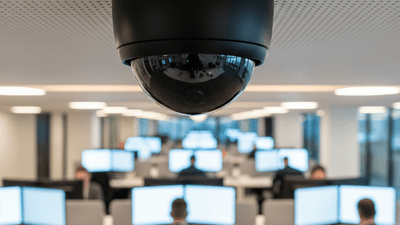
Navigate the complex intersection of operational security and employee privacy with our comprehensive course, HR Guide to Workplace Surveillance Laws. In the modern Australian business environment, monitoring productivity and securing assets are critical operational necessities. However, these actions must be balanced against a fragmented legal landscape where a policy compliant in one state may be unlawful in another. This course is designed to equip Human Resources professionals and business leaders with the essential knowledge required to manage workplace monitoring legally, ethically, and transparently.
One of the primary challenges in managing workplace surveillance is the absence of a uniform national law. Throughout this course, we systematically dissect the specific legislative frameworks across all Australian jurisdictions. We examine the strict notice and consultation requirements of the Workplace Surveillance Act 2005 (NSW) and the Workplace Privacy Act 2011 (ACT), contrasting them with the privacy and criminal code provisions governing Queensland, Victoria, South Australia, Western Australia, Tasmania, and the Northern Territory. You will learn to navigate the distinct regulations that apply to listening devices, optical surveillance (CCTV), tracking devices (GPS), and computer data monitoring.
Beyond statutory analysis, this course provides a deep dive into practical application using robust policy frameworks, such as those from the Department of Human Services, as a guide for best practice. We explore the critical nuances of "consent" versus "knowledge," particularly when State laws interact with Federal telecommunications legislation. The course also details the rigorous governance required for handling surveillance data, ensuring that evidence gathering, chain of custody, and data disposal comply with Information Privacy Principles and State Records Acts.
By the end of this course, participants will be able to:
Protect your organization from legal liability and criminal penalties while fostering a culture of trust. Join us to master the legalities of workplace monitoring and establish a surveillance strategy that is both secure and compliant.
PeopleFirst Compliance Academy delivers practical CPD for HR professionals across Australia and New Zealand. We help teams stay compliant with evolving workplace laws, covering wage rules, psychosocial risk, investigations, misconduct, termination, hybrid work, and employee classifications through clear, actionable training.
